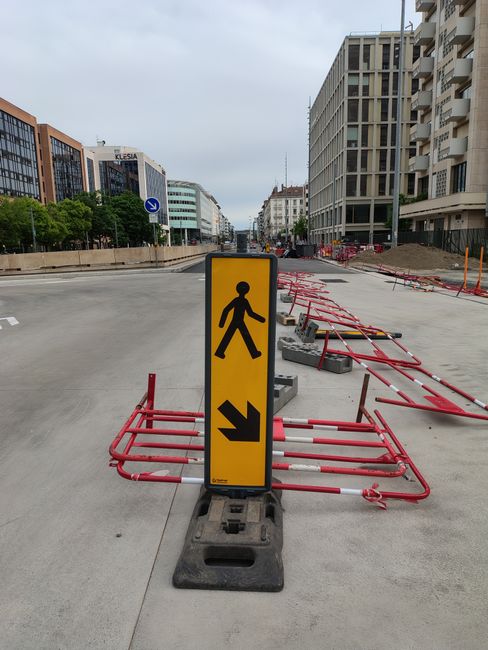
Acton Street Closure Permits: When They're Required
Planning a move, delivery, or building project in Acton and suddenly realising the street may need to be closed? That is the point where a small oversight can turn into a long, awkward delay. Acton Street Closure Permits: When They're Required is not just a paperwork topic; it can affect access, timing, safety, neighbours, and the whole day's schedule.
In practice, people usually start asking about a street closure permit when something bigger than a standard parking issue is involved: a removal lorry, a crane, scaffolding, a skip, a major delivery, or a situation where traffic will need to stop or divert. The rules can feel a bit murky at first. Let's be honest, most people only learn about them when they're already juggling trades, deadlines, and a neighbour asking where the van will park.
This guide explains when a street closure permit is typically required, how the process works, what to check before you apply, and how to reduce the chances of last-minute problems. If you are arranging a home move, office relocation, or a bulky furniture collection, it also helps to understand how related services like home moving support or office relocation services fit into the picture.
Table of Contents
- Why Acton Street Closure Permits: When They're Required Matters
- How Acton Street Closure Permits: When They're Required Works
- Key Benefits and Practical Advantages
- Who This Is For and When It Makes Sense
- Step-by-Step Guidance
- Expert Tips for Better Results
- Common Mistakes to Avoid
- Tools, Resources and Recommendations
- Law, Compliance, Standards, or Best Practice
- Options, Methods, or Comparison Table
- Case Study or Real-World Example
- Practical Checklist
- Conclusion
- Frequently Asked Questions
Why Acton Street Closure Permits: When They're Required Matters
A street closure sounds straightforward until you think through what it really means. If a road, lane, or part of the carriageway is going to be blocked, partially blocked, or actively managed so traffic cannot move as normal, the permission issue becomes serious. In many cases, the permit is less about bureaucracy and more about making sure the street stays safe and usable for everyone else.
This matters most in places like Acton where residential roads can be narrow, parking is tight, and traffic can build quickly around school runs, commuter times, and delivery windows. Even a short closure can affect buses, emergency access, local businesses, and neighbours trying to get in and out of their homes. One van parked badly on a small street can cause a surprising amount of frustration. One closure without notice can do much more.
There is also the risk side. If you organise a move or delivery assuming "we'll just manage it on the day," you may end up with vehicles circling, workers waiting, and a job that runs over. That often costs more than arranging the permit properly in the first place. To be fair, it is rarely the closure itself that causes the headache; it is the lack of planning around it.
Expert summary: if your activity will stop normal traffic flow, restrict access, or require controlled use of the road, treat the permit question early, not as a last-minute detail.
How Acton Street Closure Permits: When They're Required Works
The basic idea is simple: if your activity needs a public road to be closed or controlled, permission usually has to be considered in advance. The exact process depends on the nature of the work, the level of disruption, and the local authority's requirements. Some jobs may only need a traffic management plan or parking suspension; others can require a formal closure application and advance notice.
Street closure permits are generally relevant when access is being restricted beyond normal parking or loading concerns. For example, if a removal truck needs to stop in a way that blocks through traffic, or if a commercial move needs cones, marshals, or a short diversion, the permit question becomes much more than a formality. The same is true for a bulky item collection where loading space alone is not enough and the vehicle must sit in the live traffic lane.
In real life, many people confuse different permissions. A parking bay suspension, a loading bay arrangement, a temporary traffic control setup, and a full road closure are not the same thing. That distinction matters because the more a job affects the public highway, the more likely formal approval will be needed. If you are arranging a larger move, the planning often sits alongside services such as man with van support or a moving truck, but the street access question still has to be handled separately.
One useful rule of thumb: if pedestrians, drivers, cyclists, or emergency vehicles will need to be redirected, slowed, or stopped because of your job, ask whether the council expects a permit or traffic management approval. When in doubt, it is much safer to check early than to assume the road will be "fine for a bit".
Key Benefits and Practical Advantages
People often think permits are only about compliance, but they can actually make the whole operation smoother. A proper street closure arrangement can reduce confusion, help workers load and unload safely, and keep neighbours informed enough to plan around the disruption. That matters whether you are moving one flat's worth of boxes or coordinating a much bigger commercial relocation.
Here are some of the most practical benefits:
- Safer access for staff, residents, and passers-by.
- Less wasted time because vehicles are not left guessing where to stop.
- Better coordination with loading, unloading, and traffic management.
- Fewer neighbour complaints because disruption has been planned and communicated.
- Reduced chance of enforcement issues where the local authority expects prior approval.
There is a quieter benefit too: confidence. Once you know the closure, suspension, or access arrangement is properly handled, the rest of the day feels a lot less chaotic. You can concentrate on the move, the delivery, or the work itself instead of scanning the road every five minutes. That alone is worth a lot on a cold Tuesday morning with rain in the air and boxes everywhere.
For households, the permit question often sits alongside packing and transport planning. Services like packing and unpacking support can help reduce time spent at the curb. For businesses, it may sit next to commercial move planning so the site can keep operating with less disruption.
Who This Is For and When It Makes Sense
This topic matters for more people than you might expect. It is not just for construction crews or large haulage operators. A street closure permit may be relevant for:
- home movers using a large van, truck, or multiple vehicles
- office relocations that need a loading area or temporary access control
- furniture deliveries where the vehicle cannot stay fully off the carriageway
- furniture pick-ups from narrow streets or shared access roads
- builders, decorators, and trades coordinating materials or scaffold access
- event organisers managing temporary public access changes
It also makes sense for anyone who wants to avoid the domino effect of poor street access. For example, a family moving out of a terraced house in Acton may think a standard removal van is enough, but if the road is tight and parking is already scarce, the job may need a different access plan. In that situation, a house removal team may advise on vehicle size, timing, and whether parking or closure permissions should be checked in advance.
Commercial customers should be especially careful. A shop fit-out or office move can look simple on paper and still create a mess on the street if pallets, equipment, or multiple unloads are involved. If the job needs more space than a standard bay or loading zone can offer, the permit conversation should happen early.
Ask yourself a plain question: will the public road still function normally while this job happens? If the answer is no, then the permission issue is probably live.
Step-by-Step Guidance
If you are not sure how to approach a closure request, work through it in a structured way. A bit of order saves a lot of back-and-forth later.
- Define the real impact. Decide whether you need a full closure, a partial closure, a parking suspension, or just a loading plan. Do not overstate it, but do not underplay it either.
- Measure the space. Note the road width, kerb access, turning room, nearby junctions, and whether a larger vehicle can enter safely.
- Check timing constraints. Early mornings, school times, and busy delivery periods can make a small disruption worse than it looks on paper.
- Gather support details. Have dates, times, vehicle sizes, likely access points, and the type of activity ready. If the move involves a large vehicle, it may help to consider removal truck hire or a more compact setup depending on the street.
- Plan public safety measures. Think about cones, signage, marshals, barriers, and pedestrian diversion if needed.
- Allow enough lead time. Permits and traffic management approvals can take time, and rushed requests are where mistakes creep in.
- Communicate locally. Neighbours, building managers, and any affected businesses should know what is happening and when.
- Keep the day flexible. Weather, traffic, and loading delays can change the plan. Build in a little breathing room.
If your move is being handled by a removal provider, ask them directly how they manage access and road restrictions. A good operator will not shrug and say, "we'll sort it out later." They should be thinking about it before the first box is lifted. That's the difference between a smooth day and a stressful one.
Expert Tips for Better Results
After enough moves and access jobs, a pattern becomes clear: the best outcomes come from the simplest, earliest decisions. Not flashy ones. Just sensible ones.
Tip 1: Match the vehicle to the street, not the other way around. A smaller van with smarter scheduling can often be more efficient than forcing a large truck into a road that was never built for it.
Tip 2: Don't assume "temporary" means "no permission needed". If the road is disrupted for even a short window, the local authority may still expect formal notice or approval.
Tip 3: Keep a record of what was agreed. Date, time, access location, and any restrictions. It sounds dull, but when someone asks why a bay is blocked or a vehicle is parked on one side, you will be glad you have the details.
Tip 4: Build in a human buffer. A job that looks like two hours on a spreadsheet can become three-and-a-half once the lift is busy, the basement is awkward, or the sofa refuses to take the corner. Happens all the time, honestly.
Tip 5: Use an access-first mindset. Before you book packing, labour, or transport, check whether the street itself will support the plan. That is especially useful for larger homes, offices, and complex pickup jobs.
If you want the day to feel calmer, think about the ground reality: where the vehicle stops, how people walk past, where items will be carried, and whether the street stays usable for everyone else. Simple question, big payoff.
Common Mistakes to Avoid
Most permit problems are preventable. The trouble is that they often happen because people focus on the move itself and forget the public space around it.
- Leaving the permit check too late. This is the big one. Last-minute requests reduce options and increase stress.
- Confusing a parking issue with a closure issue. A loading bay arrangement is not automatically enough if traffic flow is affected.
- Using a vehicle that is too large for the street. It may technically arrive, but it might not operate safely or legally there.
- Skipping neighbour communication. Even when permission is in place, people appreciate a heads-up.
- Assuming one approval covers everything. Different elements can require different arrangements.
- Failing to coordinate timing with contractors or movers. If the truck arrives before the closure setup is ready, the whole job can stall.
One small but common slip: people book the transport and then try to retrofit the street plan around it. It should be the other way round. Street access first, vehicle second, job final. A little backwards? Maybe. But it saves headaches.
Tools, Resources and Recommendations
You do not need complicated software to handle a closure plan well. What you do need is a clear checklist and a few practical tools that make decisions easier.
- A site photo: useful for showing road width, entry points, and obstructions.
- A simple sketch: even a rough plan helps explain where vehicles will stop and how pedestrians will pass.
- Measurements: width, length, and turning space for the vehicle or truck.
- Booking notes: dates, times, and any access constraints.
- Loading plan: the order in which items come out or go in, especially for bulky furniture.
It also helps to work with a service provider who understands practical access issues, not just transport. For lighter loads or quick collections, man and van arrangements can sometimes fit the street better than a larger truck. For bulkier items, a specific furniture pick-up service may be the more sensible option, especially where access is tight and timing matters.
And if the job is bigger than a standard move, a team that handles home moves or office relocation services can often help you think through the access planning before the day itself. That is often where the real value lies.
Law, Compliance, Standards, or Best Practice
Because street closures affect public space, you should always treat compliance carefully. Requirements can vary depending on the road, the borough, the activity, and the level of disruption. It is not a one-size-fits-all situation, and that is exactly why checking early is so useful.
In general, the safest approach is to assume that any plan affecting live traffic, parking controls, pedestrian movement, or emergency access may need formal approval or traffic management input. Local authorities may expect evidence that the work can be carried out safely and with minimal disruption. If the job involves stopping traffic, partial lane restrictions, or a significant change to normal access, the standard of planning rises quickly.
Best practice usually includes the following:
- clear risk awareness
- advance notice to affected people
- safe pedestrian routing
- appropriate signs and barriers
- proper vehicle positioning
- coordination with any other contractors on site
Where permission or legal interpretation is uncertain, avoid guesswork. That is especially true in busier parts of London where road use, loading restrictions, and timed access can all interact. You want the plan to stand up in real life, not just look good in a message thread.
Options, Methods, or Comparison Table
Different jobs call for different levels of access control. Here is a simple comparison to help you think it through.
| Access method | Best for | Typical disruption | When it may be enough |
|---|---|---|---|
| Simple parking or loading arrangement | Small moves, quick collections, lighter loads | Low | When the road stays open and vehicles can load safely |
| Parking suspension or bay control | Moves needing guaranteed space close to the property | Moderate | When stopping space is the main issue, not the whole road |
| Partial traffic management | Bulky deliveries, larger vans, awkward access | Moderate to high | When traffic can pass with control or short holds |
| Full street closure | Major works, cranes, very restricted streets, large operations | High | When the public road cannot function normally during the job |
The table is intentionally simple. In real work, the right option usually comes down to the street layout, vehicle size, and how long the access needs to stay controlled. If you are unsure, start with the least disruptive option that still keeps the operation safe. That is usually the sweet spot.
Case Study or Real-World Example
Picture a small family moving from a terraced house in Acton on a Friday morning. The street is narrow, parking is already tight, and there is a school nearby. The family initially thinks a large removal van can simply pull up outside and work around the traffic. On paper, it seems fine. In reality, there is no real loading space, and stopping in the road would create a bottleneck.
After reviewing the access, they scale the plan back. Instead of relying on a vehicle that is too large for the street, they use a more suitable transport setup and organise timing around the quietest period of the morning. They also give neighbours notice and make sure boxes are ready by the door before the vehicle arrives. No drama, no shouting across the pavement, no endless van shuffling.
What changed? Not the house contents. Not the destination. Just the access strategy.
That is the lesson most people miss. The permit question is rarely only about permission. It is about choosing the right movement strategy for the street in front of you. Once you see it that way, the rest gets easier.
Practical Checklist
Before you go ahead, run through this checklist. It is simple, but it catches most avoidable problems.
- Have I confirmed whether the street needs a permit, suspension, or traffic control?
- Do I know whether the job will block traffic, parking, or pedestrian access?
- Have I measured the road and checked vehicle access?
- Have I planned the best time of day for the work?
- Have I allowed enough lead time for approvals?
- Have I chosen the right vehicle size for the street?
- Have I told neighbours or affected occupants what is happening?
- Do I know who is responsible for signs, cones, or barriers if needed?
- Have I kept contact details handy in case the plan changes on the day?
- Have I checked whether my removal or delivery provider understands access requirements?
If you can tick most of those boxes, you are in a much better place. If not, pause and sort the access plan first. That small pause can save a very long afternoon later.
Get a free quote today and see how much you can save.
Conclusion
Street closures and access permissions may not be the glamorous part of a move or delivery, but they are often the part that decides whether the day feels organised or messy. In Acton, where streets can be tight and timing matters, understanding when a permit is required is one of the simplest ways to protect your schedule, your budget, and your sanity.
The key is to think early, measure honestly, and match the plan to the street rather than forcing the street to fit the plan. Whether you are handling a home move, a commercial move, or a one-off bulky item collection, good access planning is never wasted effort. It is usually the bit everyone is grateful for afterwards, even if they barely noticed it at the time.
And if all this sounds a bit much, that is normal. A lot of moving problems look small until you are standing in the road with a trolley, a driver waiting, and nowhere sensible to stop. Better to sort it out now, before the first box moves.
Small planning, big relief. That is usually how the best days start.
Frequently Asked Questions
When is a street closure permit usually required in Acton?
A permit is usually needed when your work or move will block normal traffic flow, restrict access, or require control of a public road. If vehicles, pedestrians, or emergency access will be affected, check early.
Is a parking suspension the same as a street closure permit?
No. A parking suspension usually reserves space, while a street closure affects the movement of traffic. They solve different problems, and sometimes you may need both planning elements depending on the job.
Do home moves always need a permit?
Not always. A small move using a vehicle that can park safely without disrupting the road may not need one. But if the street is narrow, busy, or the vehicle will block access, a permit or other approval may be needed.
What kinds of jobs commonly trigger permit checks?
Large house removals, office relocations, commercial moves, furniture pick-ups, crane work, scaffolding, and bulky deliveries are all common examples. Anything involving partial or full road disruption should be reviewed.
How far in advance should I check?
As early as possible. The exact lead time can vary, but rushed applications are where people tend to run into trouble. Early planning gives you more vehicle options and a calmer timeline.
Can a man and van service help with tighter access?
Yes, sometimes. A smaller vehicle setup can be better suited to narrow roads or limited loading space. That said, the street access question still needs checking if the vehicle will affect traffic or parking.
What happens if I ignore the permit requirement?
You could face delays, complaints, enforcement action, or the job being disrupted on the day. At the very least, it can create stress and extra cost. It is rarely worth the gamble.
Do I need to tell neighbours about a closure or access issue?
It is strongly advisable. Even when permission is in place, neighbour communication helps reduce frustration and avoids people being caught off guard when they need to move their car or get past the property.
How do I know whether my removal truck is too large for the street?
Measure the street width, consider turning space, and think about parked vehicles, bends, and nearby junctions. If the truck will leave no practical space for others to pass, the access plan probably needs changing.
Are commercial moves more likely to need formal access planning?
Often yes, because commercial sites may involve larger deliveries, repeated loads, staff movement, and broader disruption. A business move usually benefits from a more structured traffic and access plan.
What is the safest first step if I am unsure?
Check the street conditions, identify the vehicle size, and ask whether the road will still operate normally during the job. If the answer is uncertain, speak with the provider and treat the permit question as part of the planning, not an afterthought.
Can packing help reduce the chance of needing a closure?
It can help indirectly. If items are packed, labelled, and ready to move quickly, the vehicle spends less time on the street. That may reduce disruption and make a simpler access arrangement possible.
If you are planning a move or collection and want a smoother day from the outset, explore the service options that fit your situation, from home moves to commercial moves, and keep the access plan front of mind.